
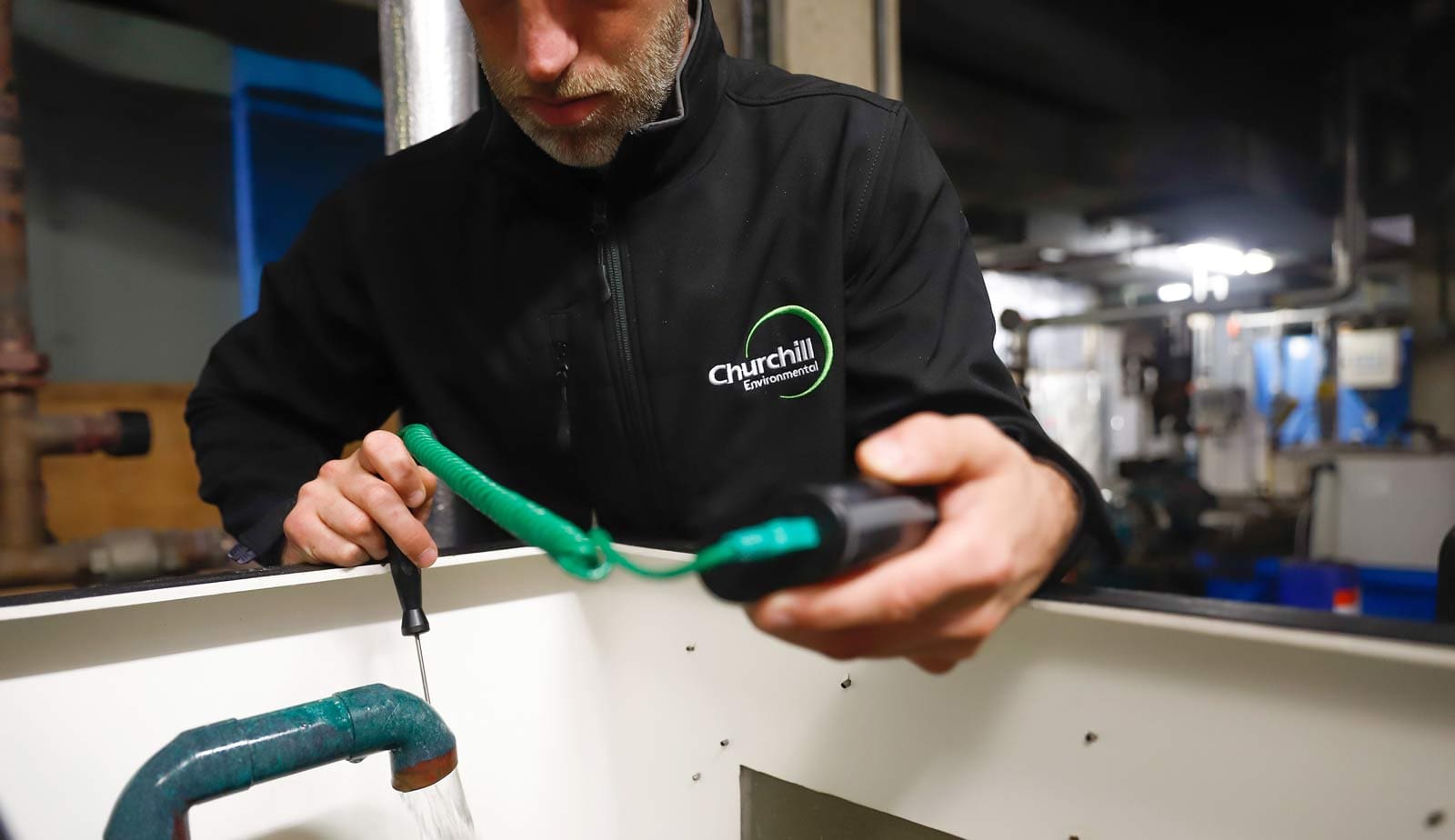
A legionella risk assessment is a systematic evaluation of your building’s water systems. It aims to identify the risk of exposure to Legionella bacteria and is a legal requirement under UK health and safety law.
The assessment examines how a premises stores, distributes, and uses water. It also identifies conditions where harmful bacteria could grow and spread. It then provides practical recommendations to manage that risk and keep building occupants safe.
Why is a legionella risk assessment a legal requirement?
Legionella bacteria in water systems can cause Legionnaires’ disease, a potentially fatal form of pneumonia. People become infected by breathing in small droplets of contaminated water. This is a serious public health risk, and cases are rising. UK Government data shows that reported cases of Legionnaires’ disease increased by 46% between 2022 and 2023.
If you are the responsible person in control of a premises, you have a legal duty to assess and manage the risk. The Health and Safety Executive’s Approved Code of Practice L8 and the accompanying technical guidance HSG274 set out the requirements. COSHH Regulations also apply, and failing to comply can result in enforcement action and significant fines.
What does a legionella risk assessment involve?
A legionella risk assessment typically covers three key areas:
- A review of your current management arrangements and monitoring records.
- A detailed physical inspection of your building’s water systems, including hot and cold water storage, distribution pipework, and any other systems (such as cooling towers), where water temperature and stagnation could create conditions for bacterial growth.
- The production of a full report with practical recommendations to manage the identified risks and meet legal obligations.
The assessment should be carried out in line with BS 8580-1:2019, the British Standard for legionella risk assessments. It is not a one-off exercise. Risk assessments should be reviewed regularly, particularly when there are changes to a building’s water systems or usage patterns.
Who can carry out a legionella risk assessment?
ACoP L8 states that a competent person must carry out the assessment. In practice, this means someone with the appropriate training, experience, and technical knowledge of water systems and legionella control.
Churchill’s expert risk assessment team delivers legionella risk assessments and system asset surveys across a range of sectors. These include education, healthcare, housing, local authorities and commercial premises.
As a registered member of the Legionella Control Association (LCA), Churchill meets all of the required service standards that apply to carrying out Legionella risk assessments. Churchill also adheres to the LCA’s code of conduct.
Book a legionella risk assessment
If you need a legionella risk assessment for your premises to review your water hygiene arrangements, Churchill can help. Contact our team at environmental@churchillservices.com or call 0845 345 1576.