
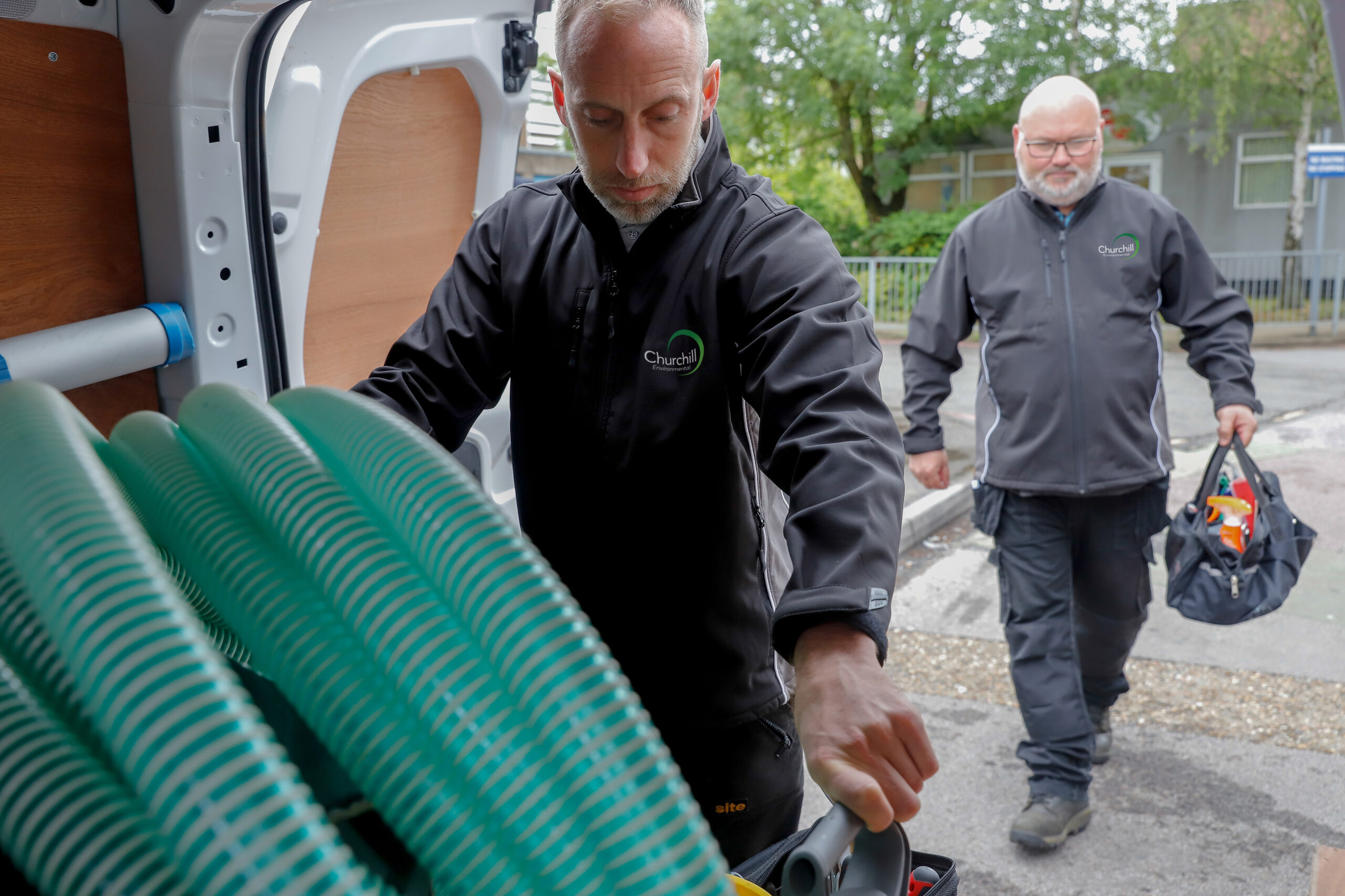
Spencer Culley, director, Churchill Environmental Services
For any organisation, the safety and wellbeing of its people should be its number one priority. At Churchill Environmental Services (CES), we embed sensor technology into our water maintenance services to do just that – keep systems compliant and building occupants safe.
Where manual data monitoring only provides a snapshot, continuous data monitoring can reduce risk by pinpointing circulatory problems in estates and feeding insights into reactive and proactive decision-making.
What are the limits of manual monitoring?
Manual monitoring only shows what a water system is doing at the moment it is checked. An engineer arrives on site, takes temperature readings at strategic points, records the results and leaves. So, if a system is failing for 24 days of the month and the visit falls on one of the six compliant days, the site passes, despite there still being a risk. This could include Legionella bacteria, which proliferate in systems that are poorly monitored and inadequately maintained.
Routine temperature checks are a useful baseline, but they don’t catch what happens between visits, particularly in hot water return systems, where water is heated, distributed and returned to be reheated. Problems in that loop can develop and settle between scheduled checks, so they can go undetected for months.
Fluctuating occupancy adds another layer. When people use a building differently from one day to the next, risk assessments set on a fixed calendar can fall out of step with how the water system is responding to changing demand.
Remote sensors close that information gap by feeding live temperature data into a dashboard that estates and engineering teams can check. In real time, this alerts us to any failures in the system, so we can troubleshoot.
Case study: rebalancing two NHS Trust hospitals’ hot water return systems
Sensor technology is especially helpful in estates with complex return systems, remote sites, or areas where a failure would carry serious consequences. In hospitals, compliance is vital.
We conducted a series of quarterly checks at an NHS Trust hospital in the East of England and found sample failures, which pointed to a recurring problem with the hot water system’s ability to circulate and return to the required temperatures. Traditional monitoring wasn’t catching what was happening between visits, so we installed remote temperature sensors across the system, feeding live data into a dashboard accessible to the hospitals’ estates and engineering teams.
Our intervention identified specific points and times of day when temperatures were dropping below the level needed to control bacterial growth. That data fed into a rebalancing exercise across the estates’ hot water return systems, which helped ensure temperatures were increased to, and maintained at, the level needed to eliminate bacteria from the system.
But this exercise was not one-and-done. Rebalancing is an iterative process, where the engineering team adjusts a portion of the system, allows it to settle, and then uses the live feed to check whether the change has held before moving on to the next area.
Without continuous data, that kind of troubleshooting would rely on trial and error, which could take considerably longer to resolve.
What are the long-term benefits of continuous water system monitoring?
Continuous monitoring builds an ongoing record of how a water system performs, which strengthens an organisation’s compliance position over time. Sensor data can feed into a building’s existing reporting systems to support monthly maintenance decisions, flag at-risk assets and keep written risk documentation up to date.
It also makes engineers more effective. Sensors extend what engineers can see, and an engineer still needs to interpret readings, understand data trends and assess the pipework on site. With live data to hand, they can focus their time on the areas that need it most.
Sensors do carry upfront costs for hardware, connectivity and licensing. Set against that is the cost of a risk that goes unnoticed, which in a clinical setting could be far higher. As the technology matures, the cost of entry is expected to fall, and the case for continuous monitoring in higher-risk or hard-to-reach systems is already strong.
What can estates do now?
FM teams, estate managers and business owners should start by asking the question: which parts of our estate would benefit most from continuous visibility? The answer is typically wherever a failure would carry the most serious consequences.
Once sensors are in place, their data should feed into your existing risk documentation and reporting systems. Some spaces, such as basements and boiler rooms, can act as signal cages, so dedicated mobile connections might be needed to keep data flowing reliably. We will review any connectivity problems to ensure that the right sensor is put in place.
At Churchill Environmental Services, we are experts in water treatment and compliance, helping organisations keep their water systems safe, compliant, and ready for evolving building uses. Find out more about our water hygiene services, explore our water treatment services or speak to our team about Legionella consultancy.